CEMS & DAHS Resources
A high-level introduction to continuous emissions monitoring systems, data handling, and the terminology you'll encounter.
What is a CEMS?
Continuous Emissions Monitoring Systems (CEMS) are instruments and equipment used to continuously measure pollutant concentrations and flow rates in stack gas emissions from power plants, industrial boilers, incinerators, and other combustion or process sources.
Unlike periodic stack testing (which might occur once per year or less frequently), CEMS provide real-time, ongoing data, often at minute-by-minute or hourly intervals, allowing facility operators and regulators to track emissions performance continuously.
Why CEMS?
- Regulatory compliance: Many federal and state air quality regulations require continuous monitoring rather than periodic testing
- Real-time accountability: Continuous data provides a complete picture of emissions performance and helps identify upsets or malfunctions quickly
- Process control: CEMS data can inform combustion optimization and other operational adjustments
Common Regulatory Drivers
- 40 CFR Part 75: Acid Rain Program and other EPA programs requiring continuous monitoring of NOₓ, SO₂, CO₂, and flow from power plants and certain industrial sources
- 40 CFR Part 60 (NSPS): New Source Performance Standards requiring CEMS for specific source categories
- 40 CFR Part 63 (MACT): Maximum Achievable Control Technology standards for hazardous air pollutants, some requiring continuous monitoring
- 40 CFR Part 98: Greenhouse Gas Reporting Program, using CEMS data for CO₂ mass emissions calculations
- State and local permits: Many facilities have permit conditions requiring CEMS beyond federal minimums
CEMS vs. Periodic Stack Testing
Continuous Emissions Monitoring (CEMS)
- Automated, ongoing measurement (24/7/365)
- Installed permanently at the facility
- Produces minute-by-minute or hourly data
- Requires regular calibration, maintenance, and QA testing
- Used for compliance reporting and real-time operational insight
Periodic Stack Testing
- Performed by third-party testing firms on an annual or less frequent basis
- Temporary test setup (typically a few hours per test run)
- Provides a snapshot of emissions during test conditions
- Often used to certify CEMS accuracy (RATA tests)
- Required for pollutants or sources not subject to continuous monitoring
Both methods have their place. CEMS provides ongoing compliance assurance and operational data, while periodic testing serves as an independent verification tool and addresses pollutants that don't require continuous monitoring.
Where Does DAHS / RegPerfect Fit?
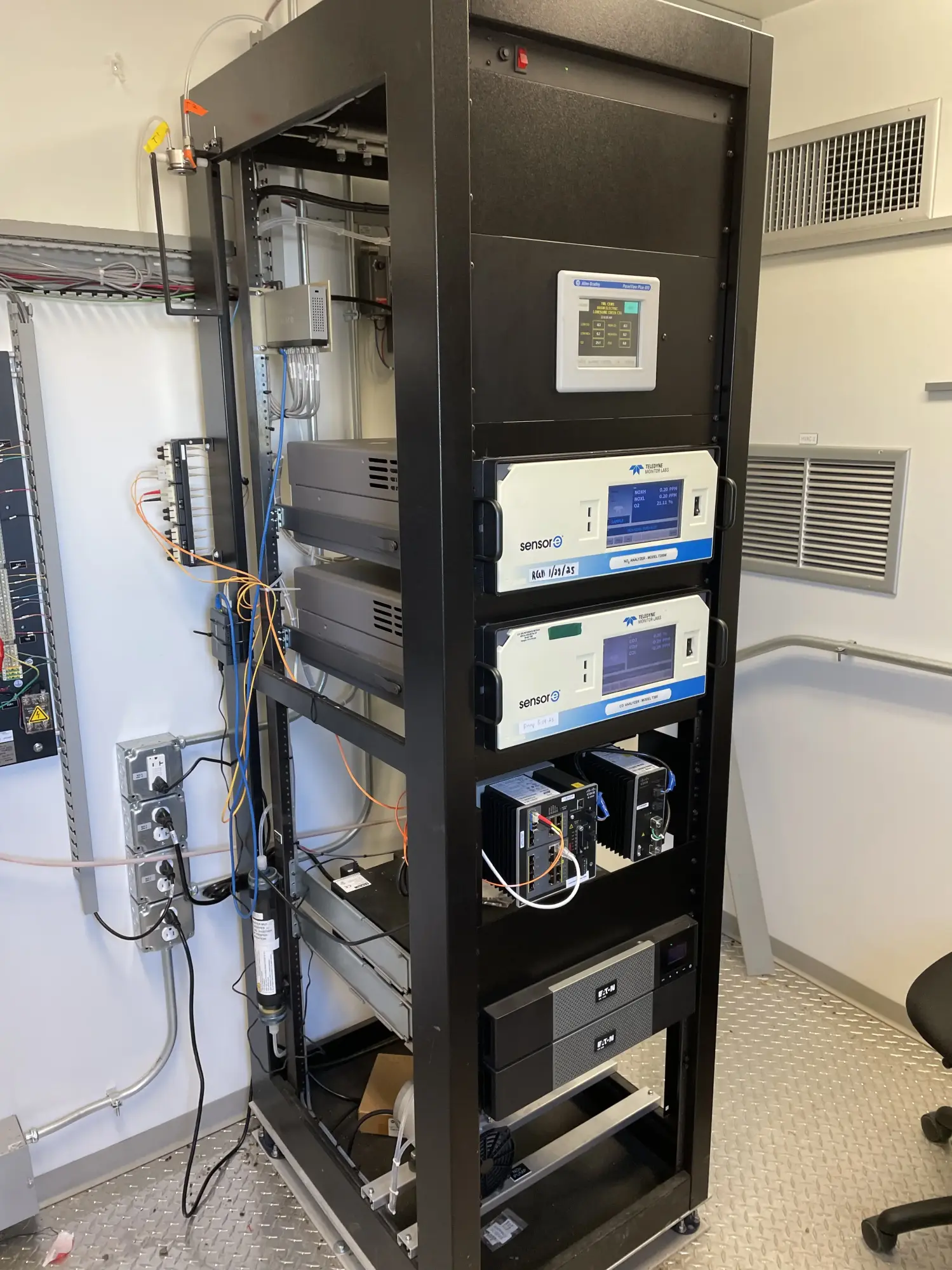
The analyzers and instruments that measure stack gas are only half of a CEMS. The other half is the Data Acquisition and Handling System (DAHS).
What a DAHS Does
- Data collection: Polls analyzer outputs continuously (e.g., every second or minute)
- QA/QC application: Applies calibration corrections, checks for out-of-range data, flags missing data
- Data validation: Implements substitute data procedures when analyzers are offline or out of calibration
- Reporting: Generates hourly, daily, and quarterly reports in the formats required by regulators
- Archiving: Stores historical data for audits and long-term trend analysis
Why It Matters
Without a properly configured DAHS, even the best analyzers can't meet regulatory requirements. The DAHS ensures that:
- Your data is complete, accurate, and audit-ready
- Missing data periods are documented and handled according to regulatory rules
- You can quickly respond to regulator questions or audit requests
- You have visibility into system performance trends and potential issues
RegPerfect
Teledyne's RegPerfect DAHS platform integrates seamlessly with Teledyne analyzers (and third-party instruments) and includes pre-configured templates for common regulatory reporting requirements.
Common CEMS Terminology
CEMS
Continuous Emissions Monitoring System. The complete system of analyzers, sample handling equipment, and data acquisition used to measure stack emissions continuously.
DAHS
Data Acquisition and Handling System. The software and hardware that collects, validates, and reports emissions data from CEMS analyzers.
RATA
Relative Accuracy Test Audit. A performance test comparing CEMS measurements to simultaneous reference method measurements, typically conducted annually or after major repairs.
CGA
Cylinder Gas Audit. A QA test where known-concentration gas standards are introduced to the CEMS to verify measurement accuracy.
Linearity Check
A QA test using multiple gas standards across the measurement range to verify that the analyzer response is linear and accurate.
Calibration Drift
The change in CEMS response over time, checked daily or per shift using calibration gases. Excessive drift triggers corrective action.
Downtime / Missing Data
Periods when the CEMS is offline, out of calibration, or otherwise not producing valid data. Regulations specify how to calculate substitute data for these periods.
Substitute Data
Emissions values used in place of missing CEMS data, calculated according to regulatory formulas (often conservative assumptions to avoid under-reporting).
Extractive CEMS
A CEMS that extracts a sample of stack gas, conditions it (removes moisture, particulates), and analyzes it in a shelter or rack-mounted analyzer.
Dilution-Extractive CEMS
A CEMS that dilutes the stack gas sample at the probe, reducing the need for traditional sample conditioning and improving response time in some applications.
Frequently Asked Questions
Daily or per-shift calibration checks are typical, using zero and span (upscale) calibration gases. Automated systems perform these checks without operator intervention. In addition, quarterly or annual linearity checks and cylinder gas audits are required under most regulations.
If your CEMS is offline or out-of-calibration, you'll typically apply substitute data procedures as specified in your applicable regulation (e.g., 40 CFR Part 75 Appendix D). These procedures use conservative estimates or historical data to fill the gap. Prolonged outages or repeated QA failures can trigger regulatory notifications or enforcement actions, so timely repairs and maintenance are critical.
Often, yes. Many facilities use a single CEMS to meet multiple requirements (e.g., Part 75 Acid Rain reporting, Part 60 NSPS compliance, and state permit conditions). Your DAHS can be configured to generate reports for each program. However, you must ensure the CEMS meets the specific performance and QA requirements for each applicable regulation.
Retention requirements vary by regulation, but 3–5 years is common for most federal programs. Some state permits or enforcement orders may require longer retention. Your DAHS should have sufficient storage and backup to meet these requirements, and you should maintain documentation of calibrations, QA tests, and maintenance activities for the same period.
The answer depends on your source type, size, fuel, pollutants, and applicable regulations. Some regulations explicitly require CEMS (e.g., 40 CFR Part 75 for large combustion sources), while others allow periodic testing or other monitoring approaches. If you're unsure, consult your permit, applicable regulations, and your environmental compliance team. CEMSource can provide technical input, but we do not provide legal or regulatory compliance advice.
Still have questions about CEMS or DAHS?
Contact CEMSource to discuss your specific monitoring needs and regulatory requirements.
Get in Touch